Posted on May 14th 2026
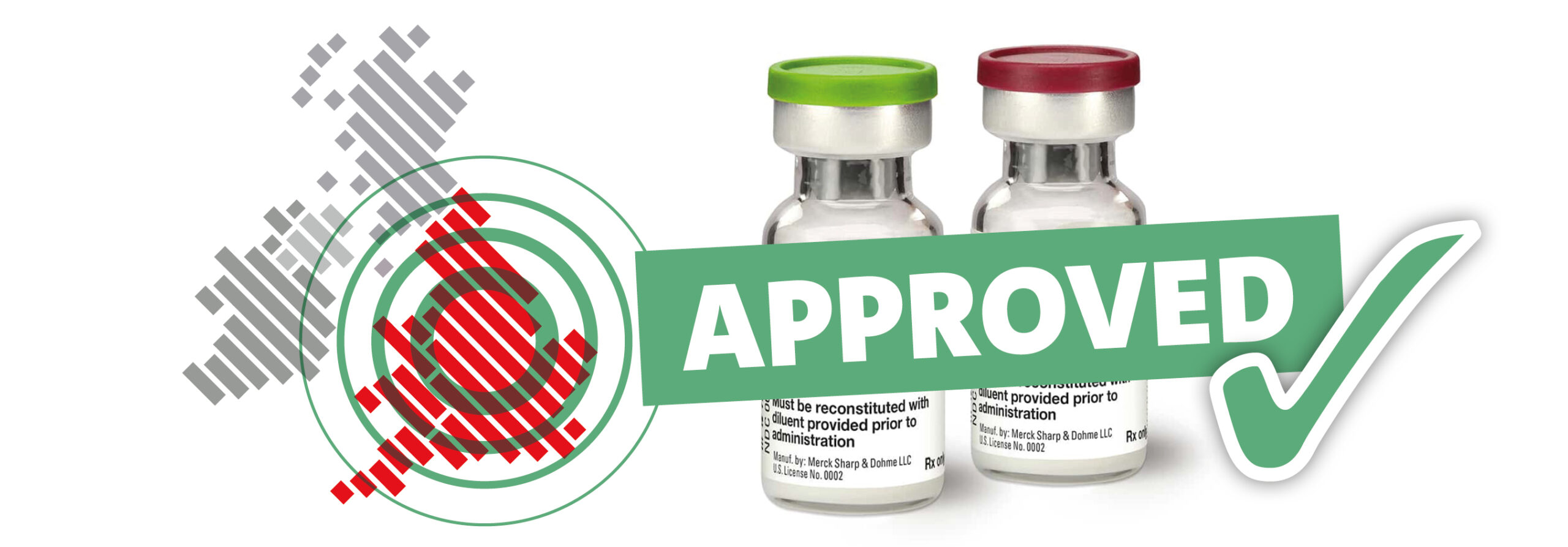
The new PAH drug sotatercept has now been approved for use in eligible patients in England and Wales.
The decision by the National Institute for Health and Care Excellence (NICE), announced on 14th May, means the drug (brand name Winrevair®) can be prescribed alongside existing PAH treatments for patients who meet specific clinical criteria. The drug was approved in Scotland by the Scottish Medicines Consortium in April, and Northern Ireland will make its own separate decision in due course – taking the NICE recommendation into account.
NICE has approved sotatercept for adults with PAH whose condition has not improved enough with combination therapy, and who were assessed as ‘intermediate-low risk’ at their last specialist check-up. In plain terms, this is likely to mean it will be available to patients who remain significantly limited by their symptoms despite existing treatment, but who are not yet at the highest risk level.
At the PHA UK we played a direct and active role in this outcome. As a formal stakeholder in the NICE appraisal process, we attended review meetings, submitted evidence of the unmet needs faced by people living with PAH, and in March 2026 made a formal representation to NICE to challenge the process and push for a faster decision.
Two PHA UK members living with the disease took part in the first review meeting, and everyone who has ever shared their experiences in one of our surveys has contributed to this decision.
Dr Iain Armstrong, PHA UK Chair, said: “This is a significant moment for the PAH community. More patients will now have access to an important new therapy, and the approval matters because it was earned. Our members shared their experiences, their evidence, and their determination and that found its way into the formal process when it was needed most.
“But I want to be clear: a positive NICE recommendation is not the end of the road. It is the beginning of the next stage. Access on paper must become access in practice and that requires sustained, active work. PHA UK will continue to work alongside the clinical community, NHS England, and MSD to make sure the pathway from recommendation to prescription is clear, fast, and equitable for every eligible patient. And we will not stop advocating for the patients who fall outside the initial criteria, and who deserve a pathway too. The work is not done. It has entered a new phase and PHA UK is leading it.”
Sotatercept will not be available for prescription immediately. Following a NICE recommendation, NHS commissioning must be put in place – a process that can take up to 90 days in England and 60 days in Wales.
Dr Armstrong added: “It is also important to understand that starting sotatercept is not a straightforward process. It requires several clinic appointments in a relatively short period of time while the dosage is carefully established and your response is monitored. Specialist centres across the country are currently working through how to manage this safely and equitably for all eligible patients and that takes time to get right.
For this reason, we ask that you allow your specialist team to contact you when sotatercept is available and the right pathway is in place for you. Please do not reach out to them in the meantime and when the time comes, they will be ready for you.”
______________________________________________________________________________
About sotatercept
Sotatercept represents a completely new approach to treating PAH. Most existing treatments are known as vasodilators, which work by relaxing and widening narrowed blood vessels. These help manage symptoms but do not address the underlying cause of the disease.
Sotatercept works differently. It targets the signalling pathways involved in the disease process itself, helping to rebalance the ‘problem proteins’ that drive PAH. This makes it the first treatment of its kind to act more directly on the root cause of the condition.
It’s important to note that sotatercept is not a cure. It is also not suitable for everyone. For those who are eligible, it is used alongside existing treatments and is given as an injection under the skin every three weeks.